Saturday, December 7, 2013


Monday, December 2, 2013
A Meeting Between Elizabeth Wurtzel and Jonathan Franzen
“Excuse me,” he asked quietly, “Is this seat taken?” She looked up, lusciously, from the New York Times (but in German) and blinked, still lusciously, before smiling.
“No, please go ahead.” He sat down and smiled back.
“So,” he said, “is the coffee any good here?”
She let the Times (still in German) drop to her (still luscious) lap. “No,” she said. “And I blame–”
“–the Internet,” he finished, almost unconsciously, until he realized they’d both spoken in unison. They laughed, and something warm knit the air between them together.
“The coffee here was much better before the Internet,” she said. “I’ve been to Germany.”
He scooted his chair closer to hers. “Oh, have you? I love Germany. It’s so uncool.”
“If you say you’re taking a trip to Germany, you’d better be able to explain what specifically you’re planning to do there,” she said, “or else people will wonder why you’re not going someplace where life is beautiful. Even now, Germany insists on content over form. If the concept of coolness had existed in Kraus’s time, he might have said that Germany is uncool.”
“Wow,” he said.
“I read that in a magazine,” she said by way of explanation.
“I wrote that,” he said.
“Get out of here.”
“I did, I wrote that.”
“Where did I read that?”
“The Guardian.”
“I’ve never quoted anything from a magazine in my life,” she said. “That’s amazing. Don’t you think that’s amazing?”
“Look,” he said, “It spoke to you, and that pleases me.”
“Do you find the thighs of Lena Dunham inexcusable, too?” she asked.
“I do. I do. I can find no excuse for them anywhere in the works of Karl Kraus, the Great Hater, nor in the writings of any of the lesser haters who came after him.”
“Did you know that Martha Stewart went to prison, and that all of rap music has betrayed its roots because P. Diddy hosts a costume party every year?”
“I did not know this,” he said gravely, “but I have been watching a lot of those new Mac vs. PC ads lately.”
“Computers,” she said.
“Computers,” he said. They drank their coffee.
“Have you ever noticed,” she began, then halted.
“What is it?” he asked.
“No, it’s stupid,” she said.
“Impossible.”
“Have you ever noticed,” she continued, “Have you ever noticed that everything important on television is about people our age?”
He nodded slowly. “I had noticed that,” he said. “I had noticed that, because all of my friends who own television sets have told me that.”
“Not like how the Internet is,” she said, laughing a little. He laughed too. The coffee was warm and dark.
“I’ve heard of Fifty Shades of Gray,” she said, not a little proudly.
“Hmm,” he said. “Everything is wrong.”
“Facebook,” she said knowingly.
“Yes, Facebook,” he agreed. “What should the young people do?”
“The young people should rock bands,” she said, banging her fist on the table so emphatically her coffee spilled a little. They laughed a little then, because she was so full of life, just as her cup was full of coffee.
“The young people should not Jeff Bezos. Nor Amazon,” he said, then poured like half a thing of the sugar shaker into his coffee. “They should not shout ‘Whoa!’ at Mentos.”
“There is no system too harsh to stop genius,” she said.
“You’ve made a claim,” he said.
“I have, haven’t I?” she smiled.
“But of course–” he began.
“The Internet,” they finished together in chorus.
“Between piracy, and China, and digital, Hollywood is just all messed up,” she said.
“And Salman Rushdie keeps sending me emojis,” he said. A single tear fell into his sugar mound.
“Everything should be intense,” she said. “Like Led Zeppelin, or escalators, or dying inside of a forest.”
“Like King Lear,” he said. They both flung their coffee in each other’s open eyes.
“That was so intense,” she breathed, blinking. “I can’t see.”
“Could you ever see?” he asked, bleeding a little bit out of his eyes.
“Let’s go to Germany,” she cried. “Let’s go to Germany at once.”
“We are already there,” he said. And they were, and it was wonderful.
Sunday, October 20, 2013
I found this today. I had forgotten I wrote it.
I love when that happens.
"I
fastened you in this dropping hour
Tied
like a stone
To
string
In
our empty room
Pulse
runs hard
Forgetting
we stagger
Slowly
Working
my way down your tongue
Following
the length of you
Until
the seed is swallowed
Pure
black ink
Comes
from your eyes
Tell
me to scream
Or
sigh
Either
will do.
The
frost cut our lips
Taught
a winter’s lesson
Swollen
in the cave
That
formed over your mouth
I
am not only aware of my tongue
I
am aware of my teeth.
Red
ruby deepened
Flush
to the neck
You
remind me of a great swan
I’ll
make of you what unfolding is
Clutching
chests
In
a tomb like life
Wooden
ships sail in
a
beating heart breaks out."
Friday, October 18, 2013
Elizabeth Bishop, Crusoe in England
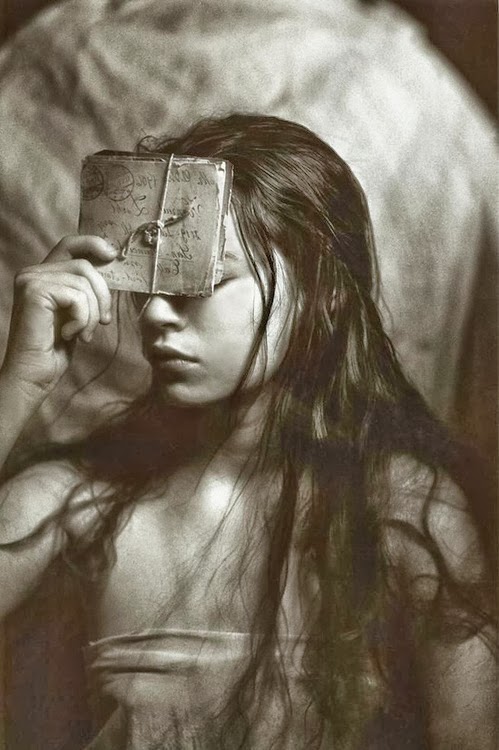
A new volcano has erupted,
the papers say, and last week I was reading
where some ship saw an island being born:
at first a breath of steam, ten miles away;
and then a black fleck—basalt, probably—
rose in the mate’s binoculars
and caught on the horizon like a fly.
They named it. But my poor old island’s still
un-rediscovered, un-renamable.
None of the books has ever got it right.
Well, I had fifty-two
miserable, small volcanoes I could climb
with a few slithery strides—
volcanoes dead as ash heaps.
I used to sit on the edge of the highest one
and count the others standing up,
naked and leaden, with their heads blown off.
I’d think that if they were the size
I thought volcanoes should be, then I had
become a giant;
and if I had become a giant,
I couldn’t bear to think what size
the goats and turtles were,
or the gulls, or the overlapping rollers
—a glittering hexagon of rollers
closing and closing in, but never quite,
glittering and glittering, though the sky
was mostly overcast.
My island seemed to be
a sort of cloud-dump. All the hemisphere’s
left-over clouds arrived and hung
above the craters—their parched throats
were hot to touch.
Was that why it rained so much?
And why sometimes the whole place hissed?
The turtles lumbered by, high-domed,
hissing like teakettles.
(And I’d have given years, or taken a few,
for any sort of kettle, of course.)
The folds of lava, running out to sea,
would hiss. I’d turn. And then they’d prove
to be more turtles.
The beaches were all lava, variegated,
black, red, and white, and gray;
the marbled colors made a fine display.
And I had waterspouts. Oh,
half a dozen at a time, far out,
they’d come and go, advancing and retreating,
their heads in cloud, their feet in moving patches
of scuffed-up white.
Glass chimneys, flexible, attenuated,
sacerdotal beings of glass ... I watched
the water spiral up in them like smoke.
Beautiful, yes, but not much company.
I often gave way to self-pity.
“Do I deserve this? I suppose I must.
I wouldn’t be here otherwise. Was there
a moment when I actually chose this?
I don’t remember, but there could have been.”
What’s wrong about self-pity, anyway?
With my legs dangling down familiarly
over a crater’s edge, I told myself
“Pity should begin at home.” So the more
pity I felt, the more I felt at home.
The sun set in the sea; the same odd sun
rose from the sea,
and there was one of it and one of me.
The island had one kind of everything:
one tree snail, a bright violet-blue
with a thin shell, crept over everything,
over the one variety of tree,
a sooty, scrub affair.
Snail shells lay under these in drifts
and, at a distance,
you’d swear that they were beds of irises.
There was one kind of berry, a dark red.
I tried it, one by one, and hours apart.
Sub-acid, and not bad, no ill effects;
and so I made home-brew. I’d drink
the awful, fizzy, stinging stuff
that went straight to my head
and play my home-made flute
(I think it had the weirdest scale on earth)
and, dizzy, whoop and dance among the goats.
Home-made, home-made! But aren’t we all?
I felt a deep affection for
the smallest of my island industries.
No, not exactly, since the smallest was
a miserable philosophy.
Because I didn’t know enough.
Why didn’t I know enough of something?
Greek drama or astronomy? The books
I’d read were full of blanks;
the poems—well, I tried
reciting to my iris-beds,
“They flash upon that inward eye,
which is the bliss ...” The bliss of what?
One of the first things that I did
when I got back was look it up.
The island smelled of goat and guano.
The goats were white, so were the gulls,
and both too tame, or else they thought
I was a goat, too, or a gull.
Baa, baa, baa and shriek, shriek, shriek,
baa ... shriek ... baa ... I still can’t shake
them from my ears; they’re hurting now.
The questioning shrieks, the equivocal replies
over a ground of hissing rain
and hissing, ambulating turtles
got on my nerves.
When all the gulls flew up at once, they sounded
like a big tree in a strong wind, its leaves.
I’d shut my eyes and think about a tree,
an oak, say, with real shade, somewhere.
I’d heard of cattle getting island-sick.
I thought the goats were.
One billy-goat would stand on the volcano
I’d christened Mont d’Espoir or Mount Despair
(I’d time enough to play with names),
and bleat and bleat, and sniff the air.
I’d grab his beard and look at him.
His pupils, horizontal, narrowed up
and expressed nothing, or a little malice.
I got so tired of the very colors!
One day I dyed a baby goat bright red
with my red berries, just to see
something a little different.
And then his mother wouldn’t recognize him.
Dreams were the worst. Of course I dreamed of food
and love, but they were pleasant rather
than otherwise. But then I’d dream of things
like slitting a baby’s throat, mistaking it
for a baby goat. I’d have
nightmares of other islands
stretching away from mine, infinities
of islands, islands spawning islands,
like frogs’ eggs turning into polliwogs
of islands, knowing that I had to live
on each and every one, eventually,
for ages, registering their flora,
their fauna, their geography.
Just when I thought I couldn’t stand it
another minute longer, Friday came.
(Accounts of that have everything all wrong.)
Friday was nice.
Friday was nice, and we were friends.
If only he had been a woman!
I wanted to propagate my kind,
and so did he, I think, poor boy.
He’d pet the baby goats sometimes,
and race with them, or carry one around.
—Pretty to watch; he had a pretty body.
And then one day they came and took us off.
Now I live here, another island,
that doesn’t seem like one, but who decides?
My blood was full of them; my brain
bred islands. But that archipelago
has petered out. I’m old.
I’m bored, too, drinking my real tea,
surrounded by uninteresting lumber.
The knife there on the shelf—
it reeked of meaning, like a crucifix.
It lived. How many years did I
beg it, implore it, not to break?
I knew each nick and scratch by heart,
the bluish blade, the broken tip,
the lines of wood-grain on the handle ...
Now it won’t look at me at all.
The living soul has dribbled away.
My eyes rest on it and pass on.
The local museum’s asked me to
leave everything to them:
the flute, the knife, the shrivelled shoes,
my shedding goatskin trousers
(moths have got in the fur),
the parasol that took me such a time
remembering the way the ribs should go.
It still will work but, folded up,
looks like a plucked and skinny fowl.
How can anyone want such things?
—
And Friday, my dear Friday, died of measles
seventeen years ago come March.
Monday, September 23, 2013
Tuesday, September 17, 2013
Wonka
"There is no life I know,
To compare with pure imagination
Living there you'll be free
If you truly wish to be"
To compare with pure imagination
Living there you'll be free
If you truly wish to be"
Subscribe to:
Posts (Atom)